





CNC Automation: Complete Guide to Automated Manufacturing Systems
CNC automation is the use of hardware and software to load, unload, clamp, and move parts through a CNC machine with little or no operator involvement. It keeps the spindle cutting while a person does other work, including overnight. Most shops automate one of three ways: inside the machine with a spindle gripper, beside it with a robot arm, or around it with a pallet system. This guide covers each one, what it costs, and how to pick the right fit.
What Is CNC Automation?
CNC automation means the machine handles the repetitive steps of a job that used to need a person standing at the door. Four things get automated: loading raw stock, unloading finished parts, clamping and releasing the workpiece, and moving parts between operations.
A control layer ties those steps together. It opens the door, triggers the gripper or vise, and starts the next cycle. Larger shops add a software layer on top that schedules jobs and tracks tools. How you handle the physical steps is where the main approaches split.
The Main Types of CNC Automation
Three approaches cover most of what shops actually run, plus the supporting gear that lets any of them work unattended. The three CNC automation solutions below differ mostly in where the motion comes from and what it costs to set up.

In-Machine Automation
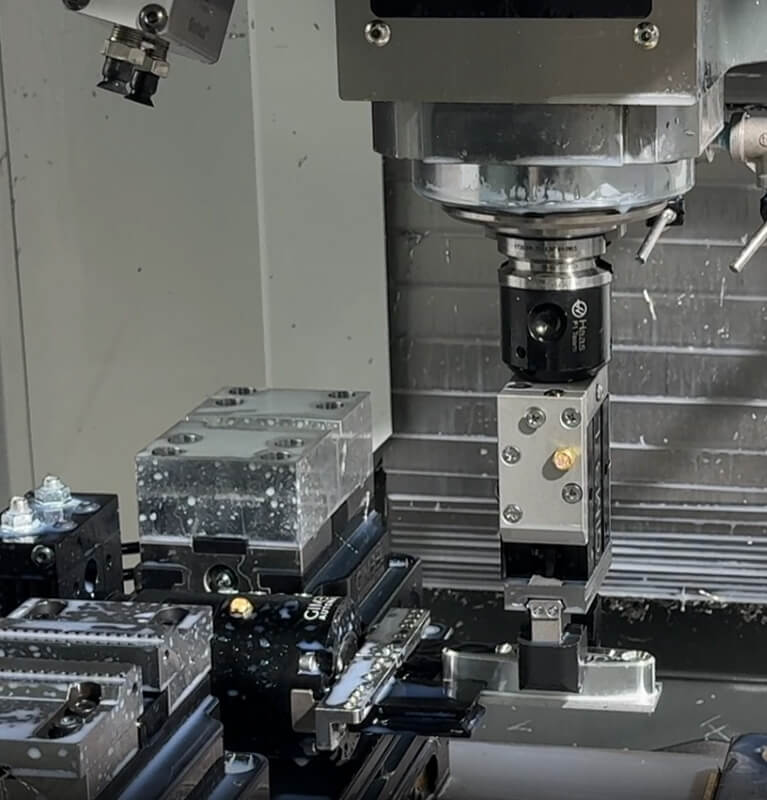
The spindle picks up the part itself. A gripper mounts in the spindle like a tool, and the machine's own axes do the moving. Programs run from the control you already use, so there is no robot to train and no cell to build.
This method adds no floor space and installs in about a day. It fits small to medium parts on a vertical machining center. Most in-machine setups start with a CNC spindle gripper and a pneumatic vise.
Robotic Cells and Cobots
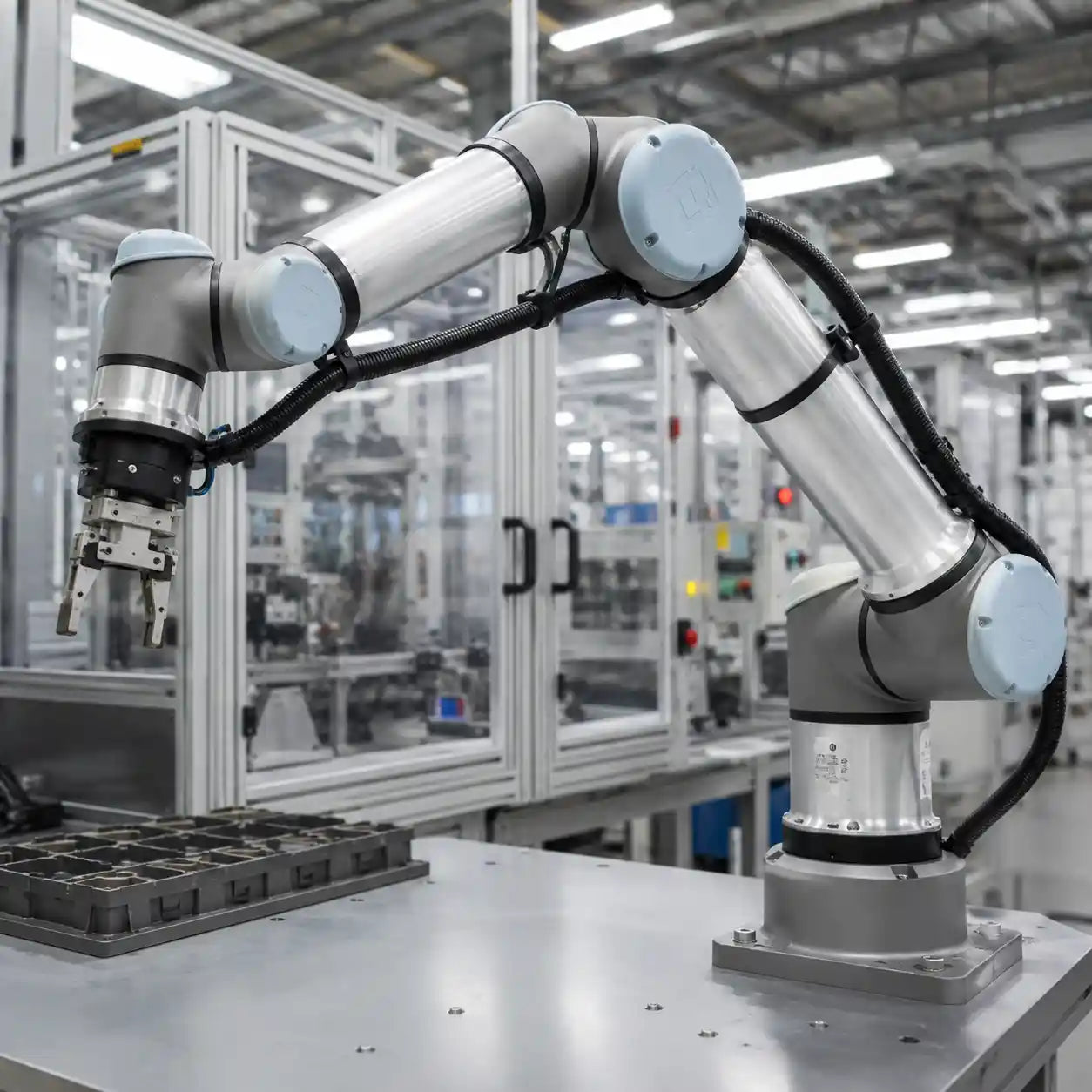
A robot arm sits beside the machine and loads and unloads it. This route is flexible, handles heavier parts, and can tend more than one machine at a time. It needs robot programming, guarding or a safety-rated cobot, and open floor space.
The trade is cost and setup time. A robot cell is a bigger investment and takes weeks or months to build and prove out.

Pallet and Multi-Pallet Systems
Parts are fixtured on pallets that swap in and out of the machine. Bigger systems hold many pallets and feed the spindle for long unattended runs. This is the highest-volume route and the highest cost, and it suits larger shops with steady work.

Supporting Automation
Some hardware makes any approach run without a hand on it. Auto-doors, self-centering pneumatic vises, part flippers, automated blasting, and air control kits all fall here. The choice still comes down to in-machine versus a robot for most shops, so it helps to see those two side by side.
In-Machine Automation vs Robot-Arm Automation
In-machine automation is cheaper and faster to set up. A robot arm is more flexible and handles bigger parts. Which one fits depends on part size, batch size, and how many machines you want one system to feed.
| Factor | In-machine (spindle gripper) | Robot arm or cobot |
|---|---|---|
| Typical upfront cost | $3,000 to $15,000 | $50,000 to $500,000 or more |
| Setup time | About a day | Weeks to months |
| Programming | Your existing control and macros | Robot and cell programming |
| Added floor space | None, it works inside the machine | Cell footprint plus guarding |
| Best part size | Small to medium | Small to large |
| Best batch size | Low to mid | Mid to high |
| Machines served | Usually one at a time | Can tend several |
A robot arm earns its cost in clear cases. Parts are heavy, one system needs to feed several machines, or volume is high enough to keep the cell busy for years. For a single vertical machining center running parts under a few pounds, an in-machine gripper usually pays back sooner and takes no floor space.
Either way, the reason to automate is the same: hours.
The Benefits of CNC Automation
Automation buys you spindle hours. A manual machine only cuts while someone is loading it, which for many shops is a small slice of the day. Keep it fed automatically and it runs through breaks, lunches, and the night shift.
The main CNC automation benefits are straightforward:
- More spindle time. A manual machining center often runs at 25% to 55% spindle utilization by common estimates. Automation pushes that toward lights-out.
- Lower labor per part. One operator can run several machines instead of standing at one.
- Repeatable quality. The machine clamps and loads the same way every cycle, so parts hold size.
- Faster payback. The in-machine systems we ship average about a seven-week payback, because the cost is low and setup is quick. You can model your own numbers with our ROI calculator.
- Safer work. The operator steps back from moving tools, hot chips, and coolant spray.
Those gains apply to any machine you can keep fed, from a mill to a lathe.
What You Can Automate: Milling, Turning, and 5-Axis
You can automate almost any CNC milling or turning job that repeats. CNC milling automation is the common starting point, because vertical machining centers are everywhere and simple to feed from the spindle.
1
Milling and Machining Centers
Vertical machining centers are the easiest place to begin. A spindle gripper loads and unloads, and a self-centering pneumatic vise clamps the part without a hand on the crank. This covers most small to mid part work in a job shop.
2
Turning and Lathes
Lathes automate through bar feeders or arm loading, depending on stock and part size. CNC machining automation on a lathe focuses on chuck loading and consistent part presentation.
3
4th and 5th Axis Work
Rotary and 5-axis setups automate with rotary vises and multi-operation fixtures. These hold the part through more than one face so a full cycle can run unattended. Picking hardware is only half the job, though. The other half is getting the automation designed, built, and proven before it reaches your floor.
How to Automate Your CNC Machine
Where do you start? With the part and the machine, not the hardware. Get those two right and the rest of the plan follows.
- Measure the part. Note size, weight, material, and how many you run.
- Pick the approach that fits. In-machine for small parts on one machine, a robot for heavier or multi-machine work, pallets for high volume.
- Solve workholding and presentation. Decide how the part is clamped and where the next blank sits.
- Wire the control. Tie in the door, gripper or vise, air solenoid, and any safety.
- Prove the cycle, then run it. Confirm a full loop works before you walk away.
You can spec an in-machine setup for your exact machine in a few minutes with our 3D configurator . Most shops would rather not work through those five steps alone, which is where turnkey help comes in.

CNC Automation Services and Support
CNC automation services cover the work between buying hardware and running parts. That includes process design, fixtures, programming, install, and operator training. The goal is a system that runs the day it is installed, not a box of parts to figure out.
We build and test the system on our machines first, then install it on yours. Hardware ships anywhere, and on-site install and training are available across California and the western states. Our full turnkey automation service handles the whole path from your part to a running cell. If you are weighing it, the questions below cover what most shops ask first.
CNC Automation FAQs
Answers to frequently asked questions about CNC machine automation & services.
CNC automation is the use of hardware and software to load, unload, clamp, and move parts through a CNC machine with little or no operator input. It keeps the spindle cutting during breaks and overnight.
No. An in-machine spindle gripper loads and unloads parts using the machine's own motion, so no robot arm or safety fence is required. A robot is one option, not the only one.
In-machine automation usually runs from about $3,000 to $15,000. Robot cells and pallet systems typically run from $50,000 to $500,000 or more, depending on size and scope.
Yes. Most vertical machining centers can be automated as a retrofit using a spindle gripper, a pneumatic vise, and an air control kit, with no change to the base machine.
Payback depends on the spindle hours you gain and the labor you save. In-machine systems we ship average about a seven-week payback, since the upfront cost is low and setup takes about a day.
Common vertical machining centers work, including Haas, Fanuc, Brother, Doosan, Hurco, and DMG Mori. If a machine has a standard spindle taper and air, it can usually be automated.