







Automation uses tech to do tasks without people. Robotics is the field of building and coding physical machines called robots. Every robot can be part of an automated system, but most automation has nothing to do with robots. The two fields overlap on the shop floor, yet they solve different problems.
That gap matters if you run a shop or manage a line. Pick the wrong tool and you waste money. Pick the right one and you can double output without hiring more people.
This post breaks down what automation and robotics mean, the types of each, where they cross over, and how they pair up in real shops.
Automation and Robotics at a Glance
The chart below shows the core split in one view.
|
Automation |
Robotics |
|
|
What it means |
Using tech to do tasks with less human input |
Building and coding physical machines (robots) |
|
Scope |
Broad: software, hardware, process control |
Narrow: focused on physical robot systems |
|
Needs hardware? |
Not always. Software bots and scripts count |
Yes. Robots are physical machines |
|
How flexible? |
Ranges from rigid (one task) to smart (AI-driven) |
Mostly able to switch tasks through new code |
|
Common examples |
Thermostats, RPA bots, conveyors, filling lines |
Robot arms, cobots, mobile robots, drones |
|
Top fields |
Every field, from finance to food |
Mainly shops, warehouses, healthcare, defense |
Here's the core idea: automation is the big umbrella. Robotics is one tool under it.
What Is Automation?
A thermostat changes your shop temp on a set schedule. No one has to touch it. That's automation at its most basic.
Automation means using machines, software, or control systems to do work that a person would do by hand. It can be as simple as a timer on a light switch. It can be as complex as a full line running parts with no one in the room.
The goal is steady output with less direct human labor.
Types of Automation
Not all automation looks the same. Five main types sit on a scale from simple to smart.
1. Software Automation
No machines at all. This type runs on computers. RPA bots fill out forms. Workflow tools route invoices. Test scripts check code. Software automation handles dull, repeat digital tasks faster and more cleanly than people can.
2. Fixed Automation
Also called rigid automation. One machine, one task, high speed. A bottling line fills, caps, and labels jars in the same order all day. You can't switch it to a new product without big changes to the hardware. Fixed automation fits high-volume, low-mix work.
3. Programmable Automation
You can load new code between runs. A press brake, for example, runs one bend setup for a batch, then takes a new program for the next batch. This type suits shops that switch parts now and then but still run large lots.
4. Flexible Automation
One step past programmable. Changeovers happen fast, often without stopping the line. A cell might run Part A in the morning and Part B after lunch with little downtime. This fits shops that handle lots of part numbers in smaller batches.
5. Intelligent Automation
This layer adds AI and real-time data. A system can predict when a bearing will fail and call for service before it breaks. It can tweak feed rates mid-cycle based on sensor input. This is the base of Industry 4.0 and smart factory ideas.
Each type builds on the one before it. Most shops use a mix.
What Is Robotics?
A six-axis arm welds a car frame at 200 inches per minute, hitting the same spot within four thousandths of an inch, cycle after cycle. That's robotics at work.
Robotics is the branch of science that builds, designs, and codes robots. A robot is a machine you can program to move and act in the real world. Some robots run on their own. Others need a human at the controls.
The shared thread: every robot has some mix of a frame, sensors, motors, and a control system.
Types of Robots
Robots fall into groups based on how they're built and what they do.
1. Industrial Robots
These are the workhorses of the shop floor. The most common setups:
-
Articulated arms (6-axis): The classic robot arm. Six joints give full range of motion for welding, painting, assembly, and machine tending.
-
SCARA robots: Four-axis arms made for fast, precise side-to-side moves. Common in pick-and-place work and small parts assembly.
-
Delta robots: Light, high-speed robots mounted above the line. Used in food packing and chip assembly for fast sorting.
-
Cartesian/gantry robots: Move on three straight axes (X, Y, Z). Used for large-area work, 3D printing, and moving heavy stock.
2. Collaborative Robots (Cobots)
Cobots work next to people without a safety cage. Built-in force sensors stop the robot if it bumps a person. They're much easier to teach than older robots, often through hand-guiding or a tablet app.
Cobots have opened the door for smaller shops. A 10-person shop can put a cobot on a machine tending task or a parts check station without tearing up the floor plan.
3. Autonomous Mobile Robots (AMRs)
AMRs drive through a building on their own using sensors, cameras, and mapping code. They haul parts between stations, bring stock to the line, or move finished goods to shipping. Unlike older guided carts that follow tracks in the floor, AMRs steer around people and obstacles on the fly.
4. Service Robots
Used outside of plants. Hospital delivery bots, warehouse floor cleaners, and restaurant serving bots fit here. They work near people in messy settings, so they tend to be simple and safe by design.
5. Humanoid Robots
Shaped like a human body. Still mostly lab projects and demos. They don't play a real role in today's shops or offices yet.
For most production work, three types matter: industrial robots, cobots, and AMRs. They cover nearly all shop and warehouse tasks.
Key Differences Between Automation and Robotics
People mix these terms up because they overlap. Here's how to sort it out.
Scope. Automation is the big picture. Robotics is one piece of it. Every robot setup can be automated. But most automated systems don't have a robot in them.
Physical vs. digital. Automation can live in software alone. A chatbot that answers questions is automation. A script that builds reports each Monday morning is automation. Robotics always involves a machine that moves in the real world.
Flexibility. Fixed automation does one thing. Robots can switch jobs. A robot arm that welds today can load a machine next week. A hard-wired conveyor system can't.
Who's in control? Not all robots are automated. A surgeon runs a da Vinci robot by hand through a console. A tech steers a bomb disposal robot with a joystick. Those are robotics without automation. And most automation doesn't use robots. Your thermostat, your email rules, and your CNC program timer are all automation without a single robot.
That gives us four boxes:
|
No robot |
Robot involved |
|
|
Automated |
Thermostat, RPA bot, email rules |
Robot welding cell on a line |
|
Not automated |
Hand tools (no automation at all) |
Surgeon-guided robot, remote drone |
When someone says "automation and robotics," they usually mean the top-right box: robots running on a line with no one touching them.
How Automation and Robotics Work Together
A lone robot does one job. Pair it with automation, and it becomes one link in a chain that runs with little human help.
Here's what that chain looks like in a real shop. A bar feeder loads raw stock into a CNC lathe. The lathe runs its program and cuts the part. A robot arm pulls the done part out, checks it with a vision sensor, and sets it on a belt. A quality system logs the sizes. If a part drifts out of spec, the system alerts the operator or tweaks offsets on its own.
No single piece of that cell does it all. The bar feeder is fixed automation. The CNC lathe is programmable automation. The robot arm is robotics. The vision system and data log are smart automation. Together, they form a line that can run for hours, or full shifts, with no one in the room.
That idea, often called lights-out running, is the end goal for many high-volume shops. But even partial setups pay off. Running unattended for just a second shift can nearly double your hours without adding headcount.
The point: robots handle the physical moves. Automation handles the logic, timing, and data around them. The two together are far more useful than either one alone.
Benefits of Automation and Robotics
The gains from both overlap. That's why people talk about them as a pair.
More throughput. Machines don't take breaks. An automated cell runs all day, all night, all weekend with steady cycle times. Second and third shifts become useful without more hires.
Better quality. A robot loads a part the same way every time. An automated check system catches flaws that tired eyes miss on hour six. Scrap drops. Yield goes up.
Safer work. Repeat-motion injuries, fume contact, heavy lifts, and spinning tools all put people at risk. Hand those jobs to a machine and the hazard goes away.
Help with hiring. It's hard to find people willing to load parts all day. It's harder to find them for second shift. Automation fills those spots and lets your best people focus on setup, programming, and process work.
Lower cost per part. The upfront spend is real. But once the cell runs, each part costs less because labor per part goes down. Shops that automate can quote jobs they'd have to turn down otherwise.
Stronger position in the market. Faster lead times, tighter specs, and more reliable output win work. Shops that automate can bid sharper and still deliver.
These gains stack. A shop that automates one cell learns what works, then does it again on the next one.
Automation and Robotics in Manufacturing
Factories are where these tools have the longest track record and the clearest payback.
Automotive. Robot welding and paint lines have been the norm for decades. A single car plant may use hundreds of robots from body assembly through final build.
Electronics. SCARA and delta robots handle pick-and-place on circuit board lines. They place thousands of tiny parts per hour at accuracy below one millimeter.
Food and beverage. Automated packing, case loading, and stacking are the main uses. Cobots handle mixed-case stacking where product variety makes fixed automation too rigid.
Warehouses and logistics. AMRs move goods through order centers. Sorting systems send packages to the right shipping lane. Automated storage racks make full use of vertical space.
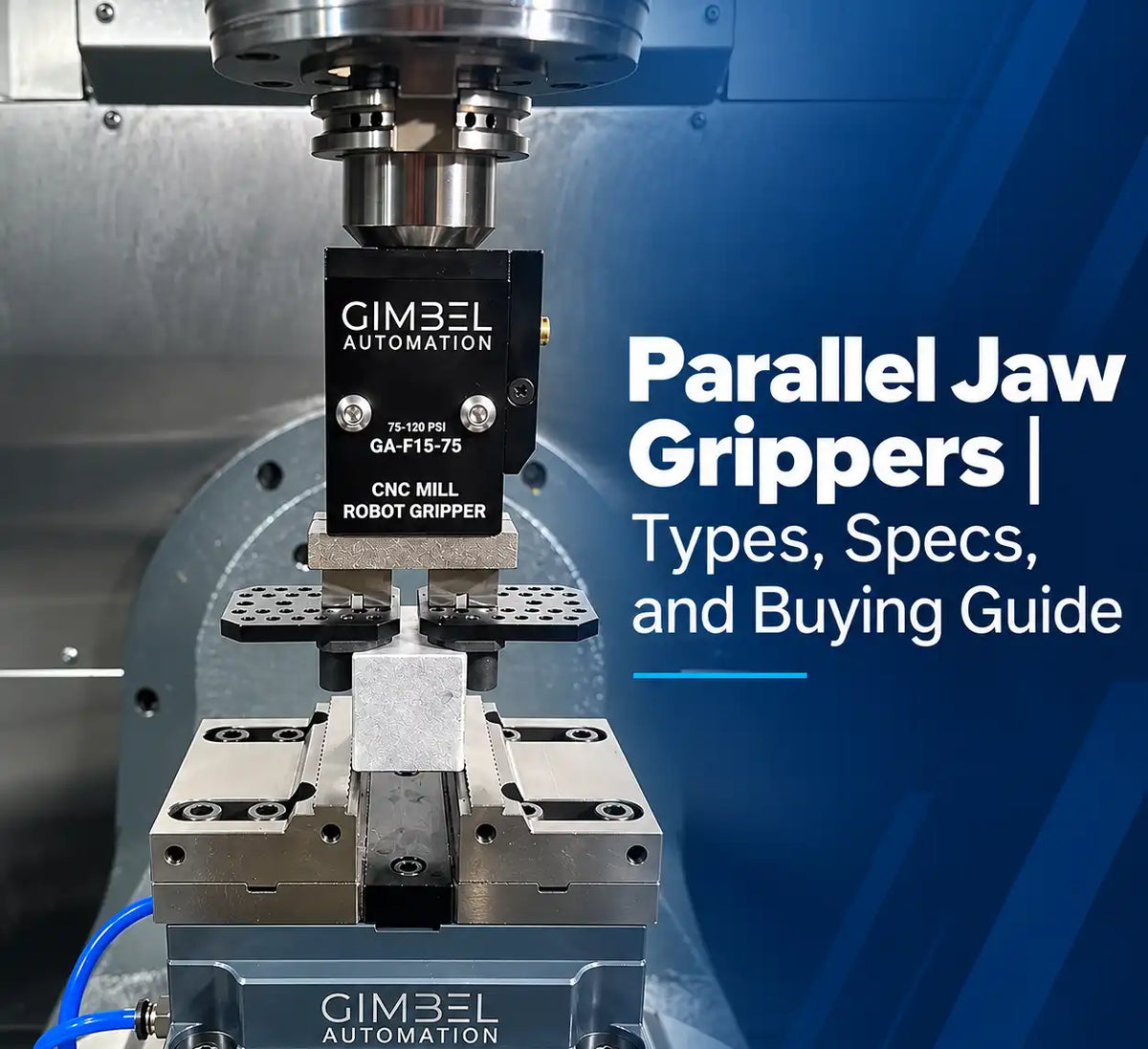
Machine shops and job shops. Robotic machine tending, bar feeders, pallet pool systems, and cobot-loaded inspection stations are now showing up in shops with as few as five people on staff. Many skip the robot entirely and run spindle grippers that let the mill load its own parts.
Each field on this list started with one automated task, proved the return, and grew from there.
Future Trends in Automation and Robotics
Five shifts are shaping where things go next.
AI-powered robots. Vision systems that sort random parts. Path plans that adjust to part changes in real time. Robots that learn new tasks from a quick demo instead of line-by-line code.
Cobots moving into smaller shops. The cost of a cobot cell has come down sharply, with a complete deployed cobot typically costing around $45,000. Hand-guided teaching means you don't need a robot expert on staff. Shops with 5 to 50 employees are among the fastest-growing groups of buyers.
Lights-out and low-lights shifts. Full lights-out is still rare. But more shops run unattended through second and third shifts. The tools that make it work, tool monitors, part handling, and remote alerts, are all on the market now.
Edge computing on the floor. Processing sensor data at the machine instead of in the cloud cuts delay. Monitoring systems that track spindle load, vibration, and coolant pressure spot problems before they cause downtime.
Spread beyond the factory. Robots laying bricks on job sites. Machines picking crops. Surgical robots in the OR. Automation and robotics are reaching fields that were all-manual a decade ago.
The trend is clear: better systems, lower costs, and wider use across both industries and company sizes.
Frequently Asked Questions
What is the difference between automation and robotics?
Automation is the use of any tech to do tasks without direct human input. It covers software, machines, and control systems. Robotics is a branch of automation focused on building and coding physical machines. Every robot can be automated, but most automation doesn't involve robots. A thermostat is automation. A welding arm is robotics.
Is robotics a type of automation?
Yes. Robotics is a subset of automation that deals with physical machines. When a robot runs a set program with no operator, that's automated robotics. But not all robots are automated. Surgical systems and bomb disposal bots need a human at the controls in real time. Those count as robotics without automation.
What is an example of automation without robotics?
An RPA bot that fills out insurance forms on its own is automation with no physical robot. Other examples: a CNC program set to run on a timer, a scheduled email, or a building's HVAC system that adjusts temp based on how many people are inside. No robot plays a part.
What is an example of robotics without automation?
A surgeon controls a da Vinci surgical robot through a console, making every move by hand. The robot adds precision and reach, but the human decides what happens in real time. Remote-control drones and deep-sea bots work the same way. The robot is a tool. The person runs it.
What industries use automation and robotics the most?
Making things leads the list, above all cars, electronics, and food. Shipping and warehousing are close behind, pushed by order bots and sorting systems. Healthcare uses surgical robots and automated pharmacy tools. Farming, building, and defense are growing fast. Nearly any field with repeat physical tasks is a fit.
How do automation and robotics work together?
Robots do the physical work: loading, welding, building, checking. Automation handles the logic around them: setting the next step, logging data, moving parts, and flagging problems. In a production cell, the two combine into a system that runs with minimal human help. Think of the robot as the hands. Automation is the brain.
Ready to see how automated systems work in a real production setup? Gimbel Automation designs and builds automation for shops and plants. Talk to our team about what you're making and we'll help you figure out where automation fits.
Explore AI Summary