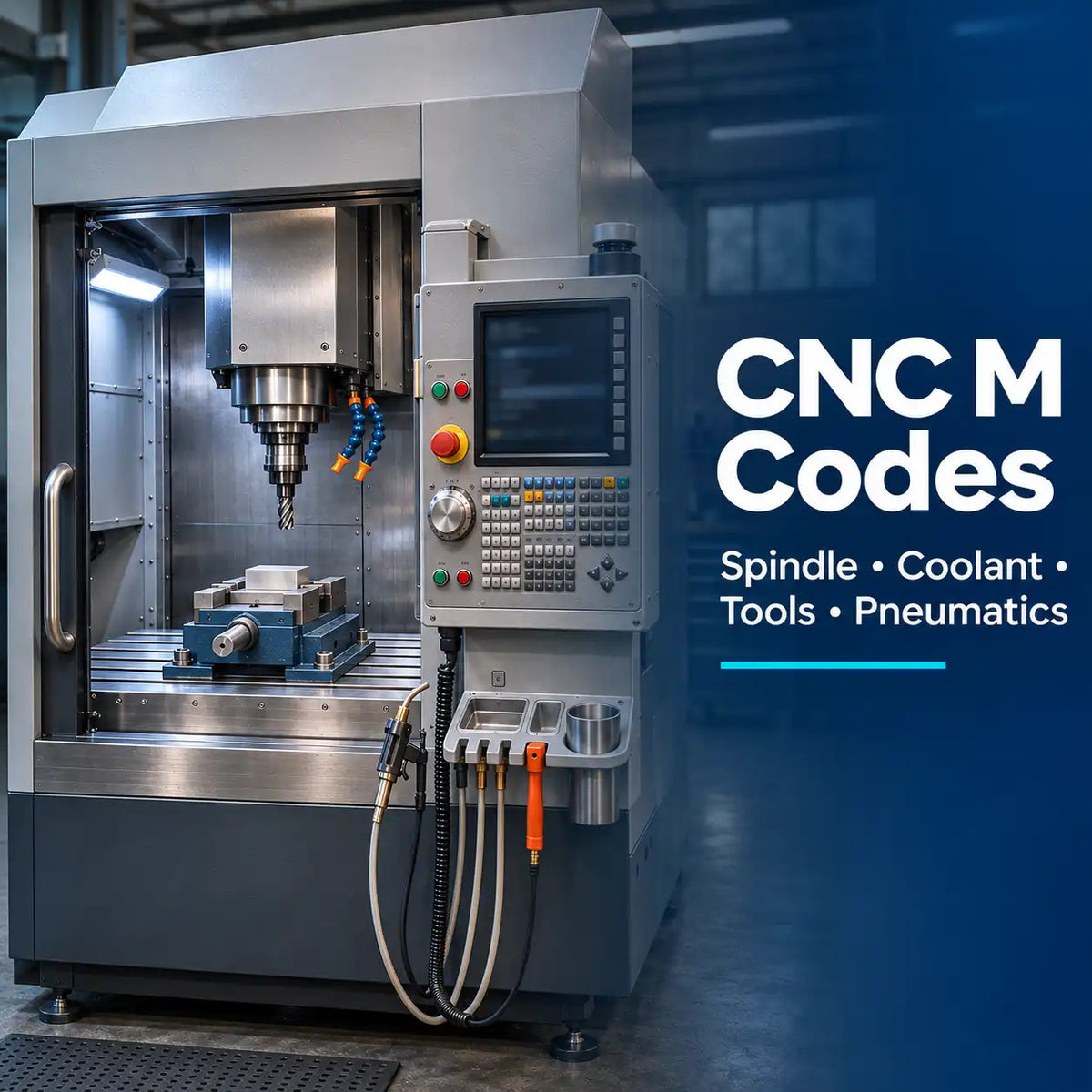







An electric gripper is a motor-driven gripper that opens and closes its jaws without compressed air. A small servo, stepper, or DC motor moves the jaws through a rack and pinion, cam, linkage, or screw drive. Depending on the model, a controller sets grip force, stroke, and speed in software. Many industrial models run on 24 V DC and mount on a robot arm, cobot, or gantry.
We build pneumatic spindle grippers, so we have no electric gripper to sell you. That makes this a plain look at the electric side: how the parts work, which types exist, what force and price to expect, and where an electric gripper does not fit. Numbers come from manufacturer specifications and retailer listings. Model-specific figures are examples, not ratings for every electric gripper.
What Is an Electric Gripper?
An electric gripper is end-of-arm tooling that holds a part using motor power. It bolts to a robot, cobot, gantry, or fixed station and grips on a signal from the controller.
Some units are plain on-off devices. They open fully or close fully, the way a basic air gripper does. Servo-electric grippers go further. They use feedback to control movement, and suitable models let the controller command intermediate jaw positions. Every servo gripper is an electric gripper, but not every electric gripper offers the same position or force control.
Names vary. Spec sheets list devices as electric robot grippers, servo grippers, or electric parallel grippers. When you compare quotes, match on jaw style, force, stroke, feedback, and interface, not on the product name.
The mechanism behind those jaws decides how the gripper behaves under load.
How an Electric Gripper Works
Close a programmable electric gripper and several parts work together. The controller sends a command. The drive powers the motor. A transmission converts motor movement into jaw travel. Depending on the design, an encoder or other sensor reports position or operating state.
Motor and drive
Compact electric grippers use stepper motors, brushless DC motors, or DC gearmotors. Larger units may use an integrated or external servo motor. Many industrial models run on 24 V DC, but voltage and peak-current requirements vary.
The drive electronics sit inside the gripper on some models and in a separate box on others. Check the complete system, including any controller, cable, and power-supply requirements.
Transmission
Rack and pinion is one common layout in parallel grippers. Two racks engage a center pinion, allowing opposing jaws to move in sync. Screw drives, cams, linkages, and other mechanisms are also used.
The transmission affects force, speed, efficiency, backlash, and resistance to back-driving. Do not assume every electric gripper uses the same mechanism or retains a part when power is removed.
Force, position, and speed control
Motor current is related to motor torque, so many electric grippers use current control or estimation to regulate the squeeze. The relationship between current and fingertip force also depends on the mechanism, friction, finger length, and calibration. A current setting is not the same as a direct force measurement.
Position feedback can help detect a missing or incorrectly sized part when the expected grip opening is known. It does not prove every aspect of a secure grip. Additional sensing may still be needed for part presence, slippage, or safety-related confirmation.
An absolute encoder retains or recovers position information after power loss according to its design. It does not mechanically hold the jaws closed. Retention requires a suitable brake, self-locking mechanism, or other verified arrangement.
Life ratings also vary. One manufacturer reports 20 million operations at maximum gripping force for its rack-and-pinion design. That is a model-specific test result, not a general life rating for electric grippers.
Motor choice shapes cost, force, and size, while the mechanism determines how motor output reaches the part.

Electric Gripper Actuator Types
The electric gripper actuator is the motor and drive inside or attached to the housing. Four common approaches appear in catalogs.
| Actuator | Typical use | What to check |
|---|---|---|
| Stepper motor | Compact grippers and programmable positioning | Open-loop or closed-loop operation, position feedback, force settings, and stall detection |
| Brushless DC servo | Industrial parallel and rotary grippers | Feedback, force-control method, continuous duty, and supported interface |
| External servo motor | Large or configurable long-stroke units | Motor and drive selection, transmission ratio, brake options, and complete installed mass |
| Voice coil | Fine-force and short-stroke handling | Continuous versus peak force, thermal limits, stroke, and required feedback |
Not every listing names the motor. Ask about the complete control architecture, because motor type alone does not tell you how finely or accurately you can control fingertip force.
Jaw design is the next part of the selection.
Types of Electric Grippers by Jaw Design
Electric grippers can be grouped by finger count, jaw motion, and added functions. These categories overlap: a two-finger gripper may also be parallel, adaptive, or part of a rotary unit.

Two Finger Electric Gripper
A two finger electric gripper grips from two opposing sides. Depending on its design and fingers, it can grip externally or expand inside a bore. Check whether fingers are included, since some catalogs sell the body and application-specific fingers separately.
Two fingers do not automatically mean parallel movement. Angular and articulated designs also exist, so confirm the jaw path and clearances.
Electric Parallel Gripper
“Parallel” describes how the base jaws move. They travel along straight guides rather than swinging about a pivot. This makes parallel grippers useful for flat, square, and cylindrical parts with suitable fingers.
Some compact and cobot models publish repeatability in hundredths of a millimeter. Confirm the conditions, including finger length and measuring point. The air-driven version uses similar jaw motion, and our parallel grippers cover that side.
Three Finger and Centric Electric Grippers
Three jaws commonly sit 120 degrees apart and move toward a shared center. That helps locate shafts, discs, and cylinders.
High-force models exist, but jaw count alone does not establish payload. Check force, allowable moments, stroke per jaw, and the supported part geometry.
Electric Rotary Gripper
An electric rotary gripper grips and rotates in one unit. One published series includes a model with 30 to 100 N per jaw, 14 mm stroke, 0.5 N·m rated rotary torque, and continuous rotation. It uses 24 V DC and supports Modbus RTU and digital I/O.
Typical applications include cap handling, bulb assembly, and sample-tube processing. Integrated rotation can avoid winding the jaw mechanism's connections around a separate rotary stage, but external cables and any additional services still need proper routing.
That example series is rated IP40, so it is not a general-purpose coolant-exposure solution. Check the workpiece mass, center of gravity, torque, and environmental limits for the selected model.
Adaptive and Long-Stroke Electric Grippers
Adaptive grippers use articulated fingers that conform to a part. One published line offers 95 mm and 145 mm stroke options, with force specified per jaw and an IP54 rating.
Long-stroke industrial units extend the working range further. One configurable family offers 100 to 400 mm of stroke per jaw and gripping force up to 12,000 N. These are substantial industrial assemblies, with size and mass that depend on the configuration.
Jaw style sets the motion and clearance requirements. Force is the other half, and that is where datasheets need careful reading.
High Force and High Capacity Electric Grippers
There is no standardized threshold for a high force electric gripper. Compact units may offer tens or hundreds of newtons, while industrial models reach several thousand. A high capacity electric gripper holds heavy parts, and that depends on force, friction, finger geometry, acceleration, and allowable moments together.
| Class | Published examples | What to know |
|---|---|---|
| Compact and small-part | From a few newtons to several hundred newtons | Force, payload, stroke, and finger limits vary widely |
| Industrial high-force | Hundreds to several thousand newtons | Check complete installed mass and the manufacturer's force convention |
| Configurable long-stroke | One family reaches 12,000 N with 100 to 400 mm per jaw | Motor, synchronization, stroke, and retention options affect the final assembly |
Force is not payload. For a simple symmetric friction grip supporting a stationary part vertically, the required total normal gripping force can be estimated from part mass, friction, and a safety factor:
Total normal gripping force (N) = part mass (kg) × 9.81 × safety factor ÷ friction coefficient
Take a 5 kg part, an assumed friction coefficient of 0.1, and a safety factor of 2. That gives 5 × 9.81 × 2 ÷ 0.1 = 981 N total normal force. For two equally loaded opposing jaws, that is about 491 N per jaw.
This is a simplified static example, not a complete sizing result. Real motion adds acceleration and moments, and coolant or oil changes friction. Measure or validate the contact conditions and use the manufacturer's selection method. A supporting ledge or form-fit finger changes the load path and the force calculation.
Two equally loaded jaws provide 200 N of total normal gripping force.
Two equally loaded jaws provide 50 N of normal force each.
Two traps catch buyers. First, makers quote force at a stated grip-point distance. Longer fingers increase moment loads and may reduce the allowable force. Second, some makers list force per jaw while others list the sum of the jaw forces. Stroke has the same split: a listing may give total opening travel or travel per jaw.
Weight is another cost of force and stroke. Include the gripper body, motor, fingers, adapter, tool changer, and part in the robot's payload and moment checks. A bare gripper-body mass is not the complete tool mass.
Our advice: do not shop on the headline force number. Choose the finger concept, then confirm the available force at the actual grip point and operating conditions.
If your part sits inside a vertical machining center, there is another route. The High Force GimGripper4 runs on through-spindle air and publishes a clamping-force range up to 1,479 N. Confirm the force available at your pressure and finger setup rather than treating the maximum as a payload rating.
Force is one trade. Air versus motor power is the bigger one.
Electric vs Pneumatic Grippers: Where Each One Wins
Pneumatic grippers often offer strong force for their size, fast actuation, and a lower initial hardware cost. Programmable electric grippers offer adjustable movement and feedback without a compressed-air connection. The winner depends on the actual models and cycle.
| Factor | Electric | Pneumatic |
|---|---|---|
| Force for its size | Depends on motor and transmission; high force can add mass | Often favorable in compact industrial designs |
| Open and close speed | Model-, stroke-, load-, and setting-dependent | Often fast; valve, pressure, flow, and stroke also matter |
| Control per part | Programmable force, stroke, and speed on suitable models | Pressure regulates force; basic jaws usually move between endpoints |
| Part detection | May use position, current, or dedicated sensors | May use jaw-position or part-present sensors |
| Air connection | Not required for jaw actuation | Supply, valves, and exhaust must be managed |
| Energy-loss retention | Depends on brake, mechanism, and validated holding arrangement | Depends on springs, valves, mechanical retention, and the load |
Be careful with blanket claims that either technology is faster. Full-stroke time and total application cycle time are different measurements. An electric gripper may shorten a cycle by moving only as far as needed, even if a comparable pneumatic unit has a faster full-stroke action.
For the full comparison, including how the choice changes for CNC work, read our guide to pneumatic vs electric gripper.
Compare control, cycle time, installed cost, and available utilities together.
Electric Gripper Advantages and Limits
Advantages
- Force per part. Suitable models let you change the force setting between parts.
- Stroke control. Programmable positioning can reduce unnecessary jaw travel and help with clearance.
- Grip feedback. Position and current data can help identify missing or incorrectly sized parts when the application supports it.
- No pneumatic supply for actuation. Remove the associated air hose, valve, and regulator from the tool.
- No actuation exhaust. This can simplify some clean-process applications, although cleanliness certification and contamination control still need checking.
Limits
- Higher upfront cost in many applications once the controller, cabling, and fingers are included.
- Mass and size. High force or long stroke can mean a heavier tool.
- Additional tooling costs. Check whether fingers, adapters, and cables are included.
- Environmental limits. IP ratings vary, and a rating for sealed electronics may not describe the entire mechanism.
- Power and communication routing. The robot wrist or external cable routing must support the gripper's electrical requirements.
On one steady part at high speed, a simple pneumatic solution may be attractive. On mixed or delicate parts, programmable electric control can earn its place.
What does that place cost?
Electric Gripper Price: What to Budget
Selected retailer listings checked in November 2026 range from roughly $400 for a small electric parallel gripper to around $2,600 for higher-force or centric examples. These are product examples, not a complete market range. Premium robot kits and larger industrial assemblies can cost more or require a quote.
| Example category | Approximate listed price | Budget note |
|---|---|---|
| Small ultra-thin parallel model | About $390 | Low-force example; check the required controller and accessories |
| Selected split-type compact parallel models | About $700 to $750 | Configuration and brake options affect price |
| Selected slim parallel model | About $850 | Confirm force, stroke, and included parts |
| Selected industrial parallel models | About $1,200 to $2,600 | Not interchangeable specifications or package contents |
| Selected compact rotary models | About $1,350 to $2,000 | Check rotary torque, stroke, interface, and brake configuration |
Rounded retailer examples in USD, checked November 2026. Prices, availability, taxes, freight, and package contents can change. Obtain a current quote for the required configuration.
The gripper is only part of the installed cost. These items can add to the total:
- Fingers and contact pads
- Mounting plates and robot adapters
- Cables and connectors
- A controller, gateway, or IO-Link master where required
- A tool changer, if you swap grippers
- Programming, testing, and commissioning time
Electric actuation can reduce compressed-air consumption, but energy savings and payback depend on the installation. Compare actual cycle frequency, holding behavior, compressor efficiency, leaks, standby consumption, maintenance, and purchase cost. A vendor's savings model is not a guaranteed result for your cell.
A budget tells you what to spend. A spec checklist tells you what to buy.
How to Choose an Electric Gripper
- Weigh the part. Use part mass for the gripping calculation. Separately add the gripper, fingers, adapter, and other tooling for the robot payload check.
- Calculate grip force. Include friction, acceleration, orientation, moments, and a suitable safety margin. Establish whether your result is per jaw or total.
- Match stroke to your parts. Cover the required opening and closing range, and check whether the listing is per jaw or total.
- Pick the jaw style. Choose parallel, angular, centric, rotary, or adaptive movement for the part and process.
- Read the force rating closely. Confirm the measuring point, finger length, operating conditions, and allowable external loads.
- Match power and interface. Many units use 24 V DC. Interfaces can include digital I/O, Modbus RTU, IO-Link, EtherNet/IP, PROFINET, and EtherCAT, depending on the model.
- Check the environment. Review the complete gripper's protection rating, connector sealing, coolant compatibility, dust exposure, and cleaning limits.
- Confirm robot compatibility. Check the flange, electrical capacity, supported communication, software integration, payload, and center-of-gravity limits.
- Plan the fingers. Select pads and geometry for friction, wear, marking, coolant exposure, and part support. Validate them on real parts.
How to connect and power one
Check voltage first, then continuous and peak current. The power supply, wrist connector, cable, and controller output must support the complete load.
For basic open and close commands, digital I/O may be enough. Serial or fieldbus links can add position commands, parameter changes, and monitoring. Some models use onboard electronics and preset force levels; others need a separate drive or controller.
Follow the manufacturer's wiring and commissioning instructions. Do not assume that the same connector means two grippers share a pinout or protocol.
Where Electric Grippers Are Used
- Assembly and small parts: controlled gripping of varied components.
- Lab automation: sample tubes, caps, and container handling.
- Electronics: handling fragile components with suitable fingers and force control.
- Cleanrooms, medical, and pharma: applications where avoiding actuation exhaust helps, using appropriately rated equipment.
- Mobile robots and AGVs: electrically powered handling without a shop-air hose.
- Machine tending cells: a robot or cobot carries the gripper into a machine.
Electric Grippers in CNC Machine Tending
Picture a cobot loading a CNC mill. The arm carries the gripper, and programmable electric gripping can help when one cell handles different part sizes or needs different force settings. Whether one gripper can cover the whole family depends on stroke, fingers, payload, and access to the fixture.
Shop conditions matter. Coolant, oil, and chips are hard on connectors, seals, and sliding mechanisms. Choose a gripper explicitly approved for the intended exposure. An IP67 rating alone does not establish resistance to every coolant, high-pressure jet, or chip condition, and some specifications rate the electronics separately from the mechanics.
The arm, machine interface, fixtures, guarding, and programming also contribute to the installed cost. Include them when comparing an external robot cell with an in-machine approach.
Our guide to CNC machine tending explains the options. In a conventional automatic tool changer, the tool taper does not provide a standard electrical power and communication connection for a gripper. An electric spindle-mounted solution therefore needs a dedicated approach, such as onboard power, a docking connection, or another engineered transfer system.
That is an integration challenge, not a universal impossibility. For a standard VMC tool-changing setup, spindle grippers actuated by through-spindle air, through-spindle coolant, or a side-fed air arrangement can offer a more direct fit. Gimbel's spindle-gripper systems are designed around vertical machining centers; other machine types need their own loading solution.
In-machine option: GimGripper4 spindle grippers

No robot arm. The gripper sits in the tool changer, and the machine's own axes move the part.
- Actuation: through-spindle air, through-spindle coolant, or a side-fed arrangement on the appropriate model
- TSA repeatability specification: ±0.001 in (±0.025 mm)
- Shank: 3/4 in, with holder and tool-changer compatibility checked for the machine
- Published TSA life: up to 2,000,000 actuations, with maintenance recommended every 250,000 cycles
- Collection pricing: jaw models listed from $1,379 in November 2026; confirm the selected package
If your machine is a vertical mill, compare that option before committing to an external arm.
Electric Gripper FAQs
What is an electric gripper?
An electric gripper uses a motor instead of compressed air to move its jaws. Programmable models let a controller command force, position, and speed within the product's capabilities. Many industrial models run on 24 V DC and mount on a robot, cobot, gantry, or fixed station.
How much does an electric gripper cost?
Selected compact, industrial parallel, and rotary retailer examples range from roughly $400 to $2,600 in November 2026. This is not a full market range. Premium models and large industrial assemblies can cost more. Include fingers, adapters, cables, control hardware, and commissioning.
How much force can an electric gripper produce?
Small models can provide only a few newtons, while industrial models reach thousands. One configurable long-stroke family publishes up to 12,000 N. Confirm whether the rating is per jaw or total, where it is measured, and what finger and load limits apply.
What is the difference between an electric gripper and a servo gripper?
A servo gripper is an electric gripper using feedback for controlled movement. Simpler electric grippers may operate between endpoints or offer only preset settings. Check the actual position, speed, and force-control functions rather than relying on the word “servo” alone.
Are electric grippers faster than pneumatic grippers?
There is no universal answer. Compare the required stroke, load, control settings, valve and communication delays, and complete cycle. Pneumatic grippers often offer fast full-stroke actuation, while programmable electric models may save time by reducing unnecessary travel.
Can an electric gripper hold a part if power fails?
Only if the selected design provides suitable retention. Options include a brake or a verified self-locking or holding mechanism. An absolute encoder preserves position information; it does not hold the part mechanically. Validate retention under the actual load and fault conditions.
What is an electric rotary gripper used for?
It combines gripping and rotation for tasks such as cap handling, bulb assembly, and sample processing. Check gripping force, rotary torque, workpiece inertia, rotation range, and environmental limits separately.
Do electric grippers work in coolant and chips?
Some are designed for those environments. Confirm protection for the complete gripper, properly installed connectors, compatibility with the actual coolant, and the specified cleaning conditions. IP67 alone is not proof of resistance to every cutting fluid or high-pressure wash.
What is the difference between a two finger and a three finger electric gripper?
A two finger gripper approaches from opposing sides and suits many rectangular or cylindrical parts with suitable fingers. A three-jaw centric gripper commonly centers round parts. Payload and usable force depend on the particular design, not finger count alone.
Can an electric gripper work inside a CNC machine?
Yes, an appropriately protected electric gripper can work on a robot arm entering a CNC machine. Using one as an automatically exchanged spindle tool is a different integration problem because a conventional tool taper does not supply standard electrical power and communication. Specialized solutions are possible, while air- or coolant-actuated spindle grippers suit many conventional VMC setups.
Explore AI Summary