






A blast cabinet is an enclosed workspace where you clean, deburr or finish parts by blasting them with abrasive media while your hands stay in glove ports. Compressed air drives media through a nozzle. In a properly equipped system, a reclaimer separates reusable media, and a dust collector removes airborne fines. To choose the right blast cabinet, match four things: part size, air supply, media and dust collection.
Shops call the same machine a sand blast cabinet, bead blast cabinet, abrasive blast cabinet or media blast cabinet. The name usually describes the media inside, not a different machine. This guide is written for CNC machine shops, where the cabinet sits next to the mill or lathe and runs every day. You will find air-demand examples, sizing rules, media choices and the accessories that remove the most labor.
What Does a Blast Cabinet Do?
A blast cabinet helps contain a process that would otherwise spread abrasive and dust through the work area. You load parts through the door, close it, put your hands in the gloves and blast while watching through the window. Containment depends on sound seals, intact gloves and properly operating extraction.
Here is the full cycle in a typical dry cabinet equipped with a reclaimer:
- Compressed air flows into the blast gun.
- Media is pulled by suction or pushed by pressure into the airstream.
- The media stream hits the part and removes light burrs, scale, paint or surface marks, depending on the abrasive and settings.
- Spent media and debris fall through the grate into the hopper.
- A cyclone reclaimer separates reusable media from fine dust.
- The dust collector draws airborne fines into its filtration system.
Blast Cabinet vs Blast Room vs Open Blasting
A blast cabinet handles parts that fit through its door, with the operator standing outside. A blast room handles larger work, with the operator working inside the enclosure. Open blasting takes place outside a cabinet or dedicated room.
Blast rooms and open blasting require additional containment, ventilation and respiratory-protection planning. For machined parts that fit inside, a properly specified cabinet is usually the practical starting point.
The enclosure is only part of the system. Performance depends on the blast equipment, air supply, media handling and dust extraction behind it.
Common Blast Cabinet Jobs in a CNC Machine Shop
A batch of 6061 brackets comes off the mill with light burrs and visible tool paths. Blasting can soften light edges and blend the surface into a more uniform finish. The result depends on the burr size, media, pressure and exposure time; heavy burrs may still need a separate deburring operation.
- Deburr light milled and drilled edges without hand-filing every part.
- Blend tool marks into an even matte finish before anodizing.
- Remove heat tint and scale from welded or heat-treated steel.
- Clean castings and forgings before machining.
- Strip paint or powder coat from parts sent back for rework.
- Profile surfaces for paint or powder-coat adhesion.
- Refresh fixtures, soft jaws and suitable tooling that collect grime.
What a Bead Blasting Cabinet Does Best
Glass bead peens the surface more than it cuts. It can give aluminum and stainless steel a satin finish and remove light burrs with relatively limited base-material removal. It is slower on rust, paint and heavy scale, so a bead blasting cabinet is a finishing tool first.
If your parts go to anodize, confirm the blasting specification with your finishing supplier. A consistent blasted surface helps achieve a uniform appearance, but alloy, machining condition, cleaning and anodizing also affect the result.
Most light finishing jobs suit a suction cabinet. Heavier removal work may justify a pressure system.
Types of Blast Cabinets
Common cabinet systems use suction, direct pressure or a wet media slurry. The choice affects removal rate, air demand, finish and purchase price.
Suction (Siphon) Blast Cabinets
A suction gun uses a jet of air to pull media up a hose and out through the nozzle. The system is relatively simple, which usually means lower cost and easier maintenance. It suits light cleaning, deburring, thin parts and small parts you turn by hand.
A working distance of about 4 to 6 inches and pressure around 60 to 90 PSI are common starting points for some industrial suction systems. Follow the gun manufacturer’s guidance and test the finish on a representative part.
Pressure Blast Cabinets
A pressure cabinet stores media in a pressure vessel and pushes it through the blast hose. Direct-pressure systems can provide faster removal on tough coatings and scale.
Air demand can be much higher than a suction setup with a similar blast-nozzle opening, because the suction gun’s smaller air jet controls its compressed-air consumption. Compare the actual manufacturers’ consumption charts rather than nozzle diameter alone.
Pressure systems can also work at lower pressures for suitable applications. Specialty media such as soda requires equipment specifically designed or approved for it.
Wet Blast and Vapor Honing Cabinets
Wet cabinets mix media with water and deliver it as a slurry. This suppresses airborne dust and can produce a different, often smoother-looking finish than dry blasting.
The trade-offs include water handling, slurry maintenance, corrosion control on susceptible parts and a higher purchase price. Wet blasting still needs an assessment of mist, contaminants and waste handling.
Benchtop vs Floor-Standing
Benchtop cabinets are usually small suction units. They work for fasteners, fittings and small brackets. Floor-standing cabinets provide more working room and can accommodate larger media-handling and extraction systems. Check what is actually included: a floor-standing enclosure does not automatically come with a cyclone reclaimer or industrial collector.
| Type | How media moves | Air demand | Best fit |
|---|---|---|---|
| Suction | Air jet draws media through a hose | Set by air-jet size and pressure | Finishing, light deburring, small and thin parts |
| Pressure | Pressure vessel feeds media into the blast line | Set by blast-nozzle size and pressure; often substantially higher | Heavy scale, coatings and production removal |
| Wet blast | Media and water delivered as a slurry | Varies by pump and gun design | Controlled finishes and reduced airborne dust |
| Benchtop format | Usually a small suction system | Model-dependent; often lower than industrial guns | Occasional work on small parts |
How to Size a Blast Cabinet
Choose a cabinet large enough to rotate your largest common part while maintaining the gun’s recommended working distance. Measure the part in every orientation you need to blast, then allow room for your hands, the gun and any fixture or basket.
| Class | Illustrative interior size | Typical work |
|---|---|---|
| Benchtop | About 20 to 28 in. wide | Fasteners, fittings and small brackets |
| Small floor | About 36 × 24 × 24 in. | Machined parts, small housings and manifolds |
| Mid floor | About 44 × 36 × 31 in. | Larger housings, fixtures and plates |
| Large industrial | Some models reach about 72 × 72 × 72 in. | Weldments, large castings and frames |
Dimensions are examples, not standardized cabinet classes. Confirm usable working space, door opening and load capacity for the exact model.
Repetitive vs Random Part Sizes
If you run the same parts in volume, size the cabinet for that part and your planned batch method. If you run a job shop with changing work, size for the parts you blast regularly rather than the largest one you see twice a year.
A cabinet sized around a rare oversized job costs more, occupies more floor space and may need a larger extraction system. Outsourcing occasional oversized work can be more practical.
Leave Room for Automation
Small parts in volume are where in-cabinet automation can pay off. A drop-in tumble basket needs working space and a loading opening large enough to pass the complete assembly through.
Our automatic tumble basket needs about 14 × 13 × 14 inches of interior space. Very small benchtop cabinets may be too short. If batching is in your future, check the door opening and installation path before buying.
Footprint and Ergonomics
Leave room to service the reclaimer, change filters and empty the dust collector. Check glove-port height against your operators and confirm that the window gives a comfortable view of the working area. Loading height matters when lifting heavy steel parts, and heavy work may need a turntable or lifting aid.
Size decides what fits inside. Air supply decides whether the gun can work consistently.
How Many CFM Does a Blast Cabinet Need?
Many industrial suction blast guns need roughly 20 to 50 CFM at 80 PSI, depending on air-jet size. Smaller hobby guns may use less. Direct-pressure systems can require substantially more air. The gun and its operating pressure, rather than enclosure size alone, determine compressed-air demand.
| Setup | Air jet / nozzle | Approximate air demand |
|---|---|---|
| Suction, smaller industrial gun | 1/8 in. air jet; 5/16 in. nozzle | About 21 CFM at 80 PSI |
| Suction, standard industrial gun | 5/32 in. air jet; 5/16 in. nozzle | About 27 to 32 CFM at 80 PSI, depending on gun design |
| Suction, larger industrial gun | 3/16 in. air jet; 3/8 in. nozzle | About 47 to 48 CFM at 80 PSI |
| Pressure, No. 3 nozzle | 3/16 in. blast nozzle | About 38 to 45 CFM at 80 to 100 PSI |
| Pressure, larger nozzle | 3/8 in. blast nozzle | About 161 CFM at 80 PSI |
These are selection examples, not interchangeable ratings for every gun. Check the consumption chart for the exact gun, air jet, nozzle and pressure.
In a suction cabinet, the air jet largely determines air use. In a pressure cabinet, the blast-nozzle bore is a major driver. Wear increases air demand, so include the manufacturer’s wear allowance when sizing the compressor.
Do not compare compressor tank size or advertised horsepower with gun CFM. Ask for delivered airflow at the required pressure, and account for compressor duty cycle, pressure drop, other shop air users and any collector pulse-cleaning demand.
A standard industrial suction gun consuming about 32 CFM needs that flow available while blasting, plus suitable reserve capacity. A compressor rated exactly at the gun’s demand can leave little room for wear or other equipment.
What PSI Should You Blast At?
Start low and increase pressure until you achieve the required finish without damaging the part. Depending on the equipment and media, these are common trial ranges:
- Glass bead: approximately 40 to 80 PSI.
- Aluminum, brass and other soft metals: approximately 40 to 60 PSI.
- Hard steel parts: approximately 50 to 80 PSI.
- Industrial suction systems: often around 60 to 90 PSI.
- Pressure systems: some applications work at much lower pressure, subject to the equipment’s operating limits.
These ranges overlap because media, substrate and system type all matter. Higher pressure can break down glass bead faster, alter the surface or distort thin parts. Test a sample before processing the batch.
Keep the Air Dry
Moisture makes media clump, disrupts metering and causes uneven flow. Drain the compressor receiver and water separator on the recommended schedule. Use appropriate air treatment for the shop’s humidity and duty cycle; a refrigerated dryer may be worthwhile for regular production.
Dry compressed air gets media to the part. Dust extraction serves a different purpose.
Dust Collection and Media Reclaim
Visibility matters in a blast cabinet. If airborne fines hide the part, consistent coverage becomes harder and operators spend more time blasting areas they cannot see clearly.
Two components handle different jobs. The reclaimer separates reusable media from fines and debris. The dust collector provides extraction and filtration. Not every cabinet includes both.
How to Size a Dust Collector
Cabinet volume helps estimate extraction airflow, but air changes alone do not establish a safe or effective design. The cabinet manufacturer’s requirements, inlet openings, duct resistance, reclaimer settings, filter loading and dust hazards all affect the selection.
Example: enclosure air changes
A 36 × 24 × 24 in. interior contains 12 cubic feet.
- At 8 air changes per minute: 12 × 8 = 96 CFM.
- At 20 air changes per minute: 12 × 20 = 240 CFM.
These calculations illustrate the difference between air-change rates. They are not a collector specification or proof of adequate containment.
Industrial cabinets may pair with extraction systems rated in the hundreds of CFM. Select a system that delivers the required airflow at the actual operating resistance, rather than relying only on an unrestricted fan rating. Excessive airflow can also carry usable media out of an incorrectly adjusted system.
Bag vs Cartridge vs Reverse-Pulse
- Cloth bag collectors: lower-cost systems whose filtration performance varies substantially. Check the actual filter specification and intended dust.
- Cartridge collectors: provide a larger filter area in a compact assembly. Compare tested efficiency, cleaning method and dust compatibility.
- Reverse-pulse cartridge collectors: use compressed-air pulses to clean the filters and can support regular production when correctly selected and maintained.
A fine-particle efficiency claim for a filter element does not establish the performance or suitability of the complete installed collector.
Is a Shop Vac Enough?
A household or general-purpose shop vacuum should not be the default extraction choice for a production blast cabinet. Fine dust can load filters quickly, reduce airflow and expose the vacuum to material it was not designed to collect.
Select extraction equipment approved for the cabinet, abrasive and contaminants. Combustible metal dust, toxic coatings and mixed dust streams may require specialized collection arrangements.

Choosing Media for Your Media Blast Cabinet
Media selection has a major effect on the finish. The same compatible cabinet can produce a satin surface or a rougher coating profile depending on the abrasive, particle size, pressure, distance and exposure time.
| Media | Main action | Typical result | Common application |
|---|---|---|---|
| Glass bead | Peening with relatively limited cutting | Satin finish | Cosmetic finishing and light deburring |
| Aluminum oxide | Angular, cutting abrasive | Matte surface with profile | Scale removal, deburring and coating preparation |
| Silicon carbide | Very hard, aggressive cutting | Etched surface; profile depends on grade and settings | Hard materials and aggressive removal |
| Garnet | Cutting abrasive | Matte finish | General cleaning in compatible systems |
| Steel shot or grit | Peening or cutting, depending on shape | Varies | Heavy work in systems designed for steel media |
| Plastic | Relatively gentle stripping | Limited substrate profiling in suitable applications | Coating removal with compatible equipment |
| Walnut shell | Relatively soft cleaning media | Limited surface alteration | Specialty cleaning; assess combustible-media requirements |
| Soda | Soft, generally single-use stripping media | Limited anchor profile | Specialty stripping with equipment approved for soda |
Before buying media, check the cabinet and reclaimer manufacturer’s approved particle-size range, density range and material restrictions. A media grade that runs well in one reclaimer may separate poorly in another.
- Glass bead: match bead size and operating pressure to the finish and reclaim system.
- Aluminum oxide: confirm the selected grit size is compatible with the gun, hoses, basket and reclaimer.
- Lightweight media: may need a specialized feed and separation setup.
- Soda: is generally not reclaimed like durable cabinet abrasives and may increase filter loading.
- Expendable abrasives: should only be used where the cabinet manufacturer approves them.
Reuse life varies with media quality, pressure, substrate, contamination and reclaim settings. Monitor the actual working mix rather than assuming a fixed number of passes.
Sand Blast Cabinet vs Bead Blast Cabinet
“Sand blast cabinet” is a common name for this equipment, but silica sand should not be treated as the default abrasive. Respirable crystalline silica can cause silicosis and other serious disease. Choose a suitable alternative and review its safety data sheet.
Non-silica media does not make the dust harmless. The workpiece, old coatings and abrasive can still generate hazardous dust, so ventilation, handling procedures and any required respiratory protection remain important.
Where the equipment is compatible with both bead and oxide, changing media also requires thorough cleaning. Oxide left in the hopper, hoses or reclaim circuit can contaminate a bead finish. Dedicated cabinets may be worthwhile when finish consistency is critical.

Blast Cabinet Features That Matter Day to Day
Spec sheets often list similar features. The differences show up during daily use. Compare these details before ordering:
- Check steel gauge and seams. Panels and joints should withstand the intended workload without excessive flexing or leakage.
- Inspect door seals. They should be accessible, replaceable and effective.
- Choose a protected viewing window. Replaceable film helps preserve visibility.
- Look for protected lighting. Confirm that lamps and covers are easy to service.
- Fit glove ports and gloves to your operators. Reach and comfort affect control.
- Use a suitable foot-operated control. Both hands remain available to handle the part.
- Check door layout. A side door can help with long parts and basket installation.
- Confirm grate load capacity. Include the workpiece, fixtures and any accessories.
- Provide an approved internal blow-off arrangement. Keep dust inside the enclosure with extraction operating.
- Specify suitable door interlocks. Verify that opening a door stops blasting as intended.
Good features make the cabinet easier to use. The right accessories can also reduce handling time.
Blast Cabinet Accessories Worth Adding
Some blast cabinet accessories are recurring consumables. Others improve process control, ergonomics or batch handling.
Consumables
- Nozzles: ceramic generally wears faster than more wear-resistant options such as boron carbide, particularly with aggressive media.
- Gloves: inspect frequently and replace damaged pairs promptly.
- Window film: replace when visibility deteriorates.
- Light covers and filters: keep the correct spares available.
Upgrades
- Foot-operated control for manual blasting.
- Media metering adjustment to maintain a consistent air-to-media mix.
- Water separation and air drying for steady media flow.
- A compatible reclaimer for systems designed to accept one.
- A turntable for heavy parts that are difficult to rotate.
- Parts trays and baskets for small workpieces.
Automated Tumble Baskets
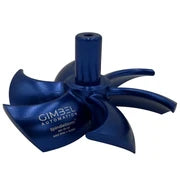
A motorized basket sits inside a compatible cabinet and turns a batch of small parts under a fixed, aimed gun. Instead of holding every part, the operator loads and unloads the batch. The cabinet still needs the correct air supply, extraction and operating controls.
Gimbel’s TumbleBlast™ comes in two sizes:
| Specification | Standard TumbleBlast™ | Giant TumbleBlast™ |
|---|---|---|
| Interior space needed | About 14 × 13 × 14 in. | About 18 × 17 × 18 in. |
| Basket | 9 in. diameter × 8.75 in. | 12 in. diameter × 12 in. |
| Maximum batch load | Up to 10 lb | Up to 25 lb |
| Adjustable speed | 0 to 16 RPM | 0 to 40 RPM |
| Media application | Glass bead and approved non-abrasive applications | Glass bead and compatible abrasive media, including aluminum oxide |
| Typical batch time | About 15 to 30 minutes, application-dependent | About 15 to 30 minutes, application-dependent |
Fill the basket to about 20 percent of its volume so parts can tumble freely, while staying within its weight rating. Confirm that the gun holder and any wear liner required for your application are included in the selected package or ordered separately.
Use only a manufacturer-approved continuous-blasting arrangement that preserves the cabinet’s interlocks and emergency controls. Do not improvise a way to defeat a deadman control.
For abrasive media and heavier loads, the Giant TumbleBlast automated sand blaster fits suitable freestanding cabinets. Use the compatibility tool on the product page to check the exact cabinet and confirm the loading opening and installation clearances.

Hand-Held vs Automated Blasting: The Labor Math
For suitable small parts in batches, automation can reduce hands-on labor. The example below separates operator time from machine processing time. Replace the assumptions with your own measured data.
Example assumptions
- 200 small aluminum parts per run.
- 30 seconds of manual blasting per part.
- $35 per hour in loaded labor.
- Four validated basket batches of 50 parts.
- Five minutes to load and unload each basket batch.
The assumed 50-part batch must fit within the basket’s volume, weight and finish-quality limits.
| Measure | By hand | Tumble basket |
|---|---|---|
| Hands-on operator time | 100 minutes | About 20 minutes |
| Labor cost per run | About $58.33 | About $11.67 |
| Operator availability during blasting | Occupied with each part | May perform other suitable work, subject to operating procedures |
At an equipment price of $879, dividing the purchase price by $46.67 gives about 19 runs. This is a simplified labor-only payback calculation. It excludes accessories, setup, air, power, media, maintenance, taxes and shipping. Confirm the current price and package contents before budgeting.
Reduced operator time does not automatically mean a shorter total run. Four sequential batches taking 15 to 30 minutes each would require 60 to 120 minutes of blasting time, plus handling. Validate finish consistency and throughput alongside labor savings.
This follows the same approach as other CNC automation we build: add automation inside equipment you already own. Explore our automated blast cabinet accessories, or see the automated sandblasting guide for more on batch planning.
Already own a blast cabinet?
Check whether a tumble basket fits your workflow
Compare basket capacity, media compatibility and cabinet clearances before choosing a model.
Explore TumbleBlast™ OptionsHow Much Does a Blast Cabinet Cost?
Blast-cabinet budgets range from a few hundred dollars for basic benchtop equipment to tens of thousands for industrial pressure systems. The included reclaimer, collector, controls and accessories can change the price substantially.
| Class | Indicative US planning range |
|---|---|
| Benchtop suction | About $100 to $450 |
| Light-duty floor suction | About $250 to $2,000 |
| Industrial suction with reclaimer and cartridge collector | About $2,500 to $7,000 |
| Pressure and production cabinets | About $9,000 to $30,000 or more |
Planning ranges are approximate and are not current supplier quotes. Verify the complete package, freight, installation and utility requirements.
The sticker price is not the complete cost. Add the compressor upgrade, air treatment, extraction, media, filters, gloves, window film and nozzles. Compressor capacity may be the largest additional expense.
A low-cost cabinet connected to an undersized compressor will struggle in daily production. Evaluate the complete air, blasting and extraction system before choosing the enclosure.
Blast Cabinet Safety and Maintenance
A properly designed and maintained cabinet helps separate the operator from the blast stream and contain dust. That protection depends on extraction, seals, gloves, controls and suitable operating procedures.
Safe Operating Habits
- Choose suitable non-silica media and review the abrasive, workpiece and coating hazards.
- Keep extraction operating and allow the specified clearing period before opening the cabinet.
- Clean parts inside the enclosure using the cabinet’s approved procedure before unloading.
- Wear appropriate eye protection for unloading and maintenance.
- Use respiratory protection when required by the exposure assessment. Collector emptying and filter changes need a defined procedure; a generic dust mask is not a substitute for required respiratory protection.
- Replace damaged gloves and seals promptly.
- Assess combustible-dust hazards and confirm that the collector is suitable for the materials processed.
- Preserve door interlocks and operating controls. Never bypass them to speed up a batch.
Maintenance Schedule
Use the manufacturer’s schedule as the authority. The table below is a starting checklist; high-use equipment may need more frequent service.
| Daily / each shift | Weekly checks | Monthly checks |
|---|---|---|
| Drain receiver and separators as specified | Inspect air jets and nozzles for wear | Inspect door seals and gaskets |
| Check gloves and visible seals | Inspect window protection; replace as needed | Inspect hoses for wear and damage |
| Check media level and extraction performance | Check filter-cleaning operation and differential pressure, where fitted | Inspect collector and reclaim components |
| Remove accumulated debris using the approved method | Screen debris where the system permits | Review media condition and separation settings |
Empty the collector and service filters when their operating limits require it, rather than waiting for a calendar date. Isolate energy and follow the equipment’s maintenance procedure before working on internal components.
Blast Cabinet Buying Checklist
- Measure your common parts and allow room to rotate them.
- Confirm delivered compressor CFM at the required pressure, with wear allowance and other air users included.
- Choose suction for suitable finishing work or pressure where removal rate justifies it.
- Pick the media and confirm cabinet, gun and reclaimer compatibility.
- Specify extraction using the manufacturer’s airflow requirements and the actual dust hazards.
- Check the loading opening, working envelope and basket installation path.
- Verify window protection, lighting, controls and door interlocks.
- Budget for air treatment, extraction, media and consumables.
- Plan how suitable small parts will be batched.
- Confirm replacement-part availability and service access.
Blast Cabinet FAQs
What is a blast cabinet used for?
A blast cabinet cleans, deburrs, strips or finishes parts with abrasive media inside an enclosure. Machine shops use it for light burr removal, surface blending, coating removal and surface preparation. The operator works through glove ports, while the cabinet and extraction system help contain abrasive and dust.
What is the difference between a sand blast cabinet and a bead blast cabinet?
The equipment may be similar, but the media and setup differ. Glass bead typically produces a satin finish through a peening action. “Sand blast cabinet” is a common general name, but silica sand should not be used as the default abrasive. Select suitable media and confirm equipment compatibility.
How many CFM do I need for a blast cabinet?
Many industrial suction guns require about 20 to 50 CFM at 80 PSI. A common 5/32 in. air-jet setup uses roughly 27 to 32 CFM, depending on gun design. Use the exact manufacturer’s chart and allow for wear, pressure losses and other air users. Dust-extraction CFM is a separate requirement.
What size air compressor do I need for a blast cabinet?
Choose a compressor that can continuously deliver the gun’s required airflow at operating pressure, with suitable reserve capacity. Check delivered CFM, duty cycle, air treatment and the demand from other equipment. Tank size and motor horsepower alone do not establish suitability.
What PSI should I run a bead blast cabinet at?
Glass-bead applications commonly use roughly 40 to 80 PSI, but the right setting depends on bead size, equipment and the workpiece. Start at the lower end of the approved range, test a sample and increase only as needed. Excessive pressure can break down beads and damage thin or delicate parts.
Is a suction or pressure blast cabinet better?
Suction is often a practical choice for finishing, light deburring and general machine-shop work. Pressure systems can remove heavy scale and coatings faster, but may demand much more compressed air. Compare sample-part results, air requirements and total system cost.
Can you use sand in a blast cabinet?
Do not treat silica sand as an appropriate default abrasive. Its respirable dust can cause serious disease. Choose a suitable alternative such as glass bead, aluminum oxide or garnet where approved for the application. Alternative media still requires effective dust controls.
How much does a blast cabinet cost?
Basic benchtop equipment may cost a few hundred dollars. Industrial suction systems with media reclaim and cartridge extraction can cost several thousand dollars, while production pressure systems can reach tens of thousands. Obtain a current quote that includes extraction, air requirements, freight and accessories.
Can I automate a blast cabinet without a robot?
Yes. A compatible motorized tumble basket rotates suitable small parts under a fixed blast gun. The operator loads and unloads the batch instead of holding each part. Confirm cabinet fit, media compatibility, part suitability and an approved continuous-blasting control arrangement.
Will a tumble basket fit my existing blast cabinet?
Check the interior working space, loading opening, grate capacity and installation clearances. Standard TumbleBlast™ needs about 14 × 13 × 14 inches inside the cabinet; Giant TumbleBlast™ needs about 18 × 17 × 18 inches. Use the product-page compatibility tool and confirm the dimensions of your exact cabinet.
Explore AI Summary