








168
Hours in a week
24%
Used by one 40-hour shift
~$5,000
Entry cost, one mill
6
Prerequisites to run unattended


Lights Out Manufacturing vs Lights Out Machining
Lights out manufacturing is the broad term. It covers molding, assembly, laser cutting, grinding and machining. Lights out machining is the CNC slice: mills and lathes cutting parts with no machinist in the room.
The difference matters because the risks differ. An injection molding cell repeats the same cycle with very little variation. A CNC job adds broken tools, chip buildup, part location and thermal drift to the list. From here on, this guide focuses on lights out CNC machining, because that is where most shops start and where most first attempts go wrong.
Lights-Out vs Lights-Sparse: Dark Plants vs Unattended Cells
Siemens uses the term “lights-sparse” for the middle path. Unattended operation runs in specific areas or processes, while the rest of the plant stays staffed. For a job shop, this is the realistic model.
| Comparison | Full lights-out (dark factory) | Lights-sparse (unattended cells) |
|---|---|---|
| People on site | None during production | Day crew present, cells run nights and weekends |
| Best fit | High-volume, standard products | Repeat parts mixed with attended work |
| How you build it | Plant-wide, all at once | One machine or cell at a time |
| Realistic for a job shop? | Rarely | Yes |
Siemens also notes that a full dark factory is easiest for simple mass production. It gets harder as product complexity and customization grow. That describes most job shops exactly.
Do Lights-Out Factories Actually Exist?
Yes, though fewer than the headlines suggest.
- FANUC (Japan): The robot maker's plant has been described as lights-out since 2001. CNN Money reported in 2003 that robots there built about 50 robots per 24-hour shift and could run unsupervised for up to 30 days.
- Philips (Netherlands): A 2012 report described its razor plant in Drachten running 128 robots with nine human quality-assurance workers.
- High-volume machining and molding: Roland Berger's research found that high-volume, low-mix component work can already run lights-out shifts using automated setup and changeover. Their same report calls the fully dark factory an aspiration for most manufacturers, not a universal reality.
So the realistic target for a CNC shop is a lights-out shift, not a lights-out building. That is also where most of the money is.
Why CNC Shops Are Moving to Lights-Out Operation
So the realistic target for a CNC shop is a lights-out shift, not a lights-out building. That is also where most of the money is.
Spindles make money only when they cut. Here is how many hours a week the spindle is even available under common schedules.
Swipe or scroll horizontally to compare schedules.
| Schedule | Available hours per week | Share of 168 hours |
|---|---|---|
| 1 shift, 5 days | 40 | 24% |
| 2 shifts, 5 days | 80 | 48% |
| 3 shifts, 5 days | 120 | 71% |
| 1 shift + unattended nights and weekends | Up to 168 | Up to 100% |
Real cutting time is lower once setups, inspection and tool changes are counted. The ratio still holds. A one-shift shop leaves three of every four hours on the table.
Lights-out operation pays off in four practical ways:
- Higher spindle utilization. Machines you already own produce more parts without a second building or a new machine.
- No third-shift hiring. The overnight shift is the hardest one to staff. A proven unattended process covers it.
- Better use of skilled people. Machinists move from loading parts to programming, setup and inspection.
- More consistent parts. Automated loading and clamping repeat the same way every cycle.
Here is the honest caveat most guides skip. Extra spindle hours only help when machining is your bottleneck. If deburring, inspection, outside finishing or shipping is the real constraint, more overnight parts simply pile up on a cart. Check where your work actually waits before you buy anything.

Is Your Shop Ready? Signs a Job Is a Lights-Out Candidate

Picture a 6061 aluminum bracket you run 300 of every month. Same program, same vise, same tools, no edits in a year. That part is a lights-out candidate. A new aerospace part with tolerances at the edge of your machine's capability is not.
Use this checklist on a specific part number, not on the shop as a whole:
- Repeat demand. You run it often, ideally on blanket orders or regular releases.
- A frozen program. Nobody has touched the code or offsets in the last several runs.
- Enough volume to fill the night. Divide your unattended window by the cycle time. A 12-hour night with an 8-minute cycle needs about 90 blanks or loaded pallets ready to go.
- Predictable material. Chips break cleanly and the stock size is consistent.
- Comfortable tolerances. Critical features sit well inside your process capability, not at its edge.
- An idle machine. The machine sits dark after your last shift now.
Jobs That Should Stay Attended
Some work should keep a person nearby, at least for now:
- First articles and new programs
- Parts with tolerances near the machine's limit
- Materials that make long, stringy chips you have not yet learned to break
- One-off jobs and very short runs
Pick the part first. Then build the process around it. The next section covers what that process needs.
The 6 Prerequisites for Unattended Machining
Unattended machining fails for predictable reasons. Each prerequisite below closes one of them. Skip any one and the night shift becomes a scrap shift.
1. A Proven, Validated Process
A lights-out process starts as an attended process that has stopped surprising you. Run the job with a machinist present until the toolpaths, feeds, fixturing and offsets stay the same run after run. Log tool life and cycle time as you go.
Our rule is simple. If you are still editing the program, it is not ready to run alone.
2. Tool Life Management
A worn tool at 1 a.m. becomes a broken tool at 2 a.m. After that, every following part is scrap.
- Tool life limits: Set them in the control, below the life you actually logged.
- Sister tools: Load backups in the magazine so the control swaps in a fresh tool when a limit is reached.
- Breakage detection: Use a tool setter, laser or spindle load monitoring to confirm the tool is whole between operations.
Conservative tool life costs a few inserts. A broken end mill left cutting all night costs a lot more.
3. In-Process Checks and Measurement
A spindle probe confirms the part is where the program thinks it is before the first cut. It can also measure critical features mid-run and update offsets, or stop the machine when a feature drifts. A tool setter does the same job for tool length and breakage.
Probing is not mandatory on every job. A simple part in a self-centering vise can run reliably without it. For tight-tolerance work left alone for 10 hours, though, a probe check is cheap insurance against a crooked part or a full night of scrap.
4. Chip Control
In our experience, chips stop more first lights-out attempts than broken tools do. Nobody is there to blow off the vise. Chips nest under the next blank so it seats crooked. They wrap tools, pack the conveyor and bury the fixture.
Practical fixes:
- Chip-breaking toolpaths and insert geometry
- Through-spindle coolant at enough pressure to clear the cut
- Conveyor cycles timed to the run, not left to chance
- An automatic blow-off before every load
That last step is the one most often missed. A spindle-mounted fan like the SpindleStorm3™ CNC chip fan loads from the tool changer and clears chips and coolant off the vise and part between operations. It costs less than one scrapped part on most jobs.
5. Repeatable Automatic Workholding
A manual vise needs a human hand. Unattended work needs workholding the control can open and close by itself.
- Pneumatic self-centering vises open and close on an M-code. Self-centering matters because blank sizes vary, and the part stays centered anyway.
- Zero-point pallets return a fixtured part to the exact same position. The Pierson Max-4 system used on our IntraLoad™ pallets is rated at 15,000 lb of pull force and 0.0002" repeatability.
- Clamp confirmation: Pressure switches or position sensors tell the control the part is actually held.
6. Automatic Part Loading
Every other prerequisite keeps a run healthy. Loading is what keeps it going. Without it, the machine finishes one part and waits for you.
You have four main options: bar feeders, robots or cobots, pallet changers and in-machine loading with spindle grippers. Our CNC machine tending solutions page covers each in depth. The comparison below shows how they stack up.
Fault Handling: What Happens at 2 a.m.
Something will eventually go wrong. The goal is to stop cleanly, not to keep cutting bad parts.
- Program a defined, safe stop for every alarm: tool break, air pressure loss, clamp failure, probe out of tolerance.
- Send alerts by text or email so someone knows before morning.
- Write a recovery procedure the day shift can follow without guessing.
- Check your coolant. Straight cutting oil carries a fire risk, and many shops add fire suppression before running unattended.
Six boxes to check. Loading is usually the most expensive one, so that is where the real decision happens.
Ways to Automate CNC Loading: Comparison
Each loading method suits a different machine, part and budget. Prices below are typical 2026 figures from published dealer and integrator pricing, plus our own list prices.
| Method | Best for | Floor space | Typical cost | Main limit |
|---|---|---|---|---|
| Bar feeder | Lathes running bar stock | Magazine behind the lathe | About $24,000 to $36,000 for a new 12 ft magazine feeder | Lathes and bar stock only |
| Cobot tending kit | Mills and lathes, moderate mix | Cell beside the machine | About $47,000 to $70,000 packaged | Needs a risk assessment and guarding plan |
| Industrial robot cell | High volume, multiple machines | Large fenced cell | $50,000 to $500,000 installed | Integration often costs 2.5 to 4 times the robot arm |
| External pallet system | HMCs, high-mix work | Adds footprint | On a 5-axis mill, often close to the base machine price | Space and integration |
| IntraLoad™ in-machine pallets | Haas UMC 5-axis mills | None added | From $49,000 | 9 to 24 pallets, 50 lb rated per pallet |
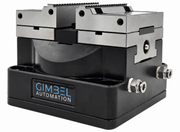
| Spindle gripper + air vise | VMCs, small parts | None added | Grippers from $1,379; One-Op bundle $5,079 | 10 lb part limit (25 lb with vacuum); tray capacity caps run length |
In-Machine Automation: Lights-Out Without a Robot
Most guides assume lights out machining means buying a robot. It does not. Your machine already has precise axes, a tool changer and a guarded, interlocked enclosure. In-machine automation uses all three.
Here is how a spindle gripper cycle works:
- The control calls the gripper from the tool changer like any other tool.
- The gripper picks a blank from a tray on the table.
- An M-code opens the pneumatic vise, and the gripper places the blank.
- The vise clamps, the gripper returns to the magazine and cutting starts.
- After the last operation, the gripper moves the finished part back to the tray and picks the next blank.
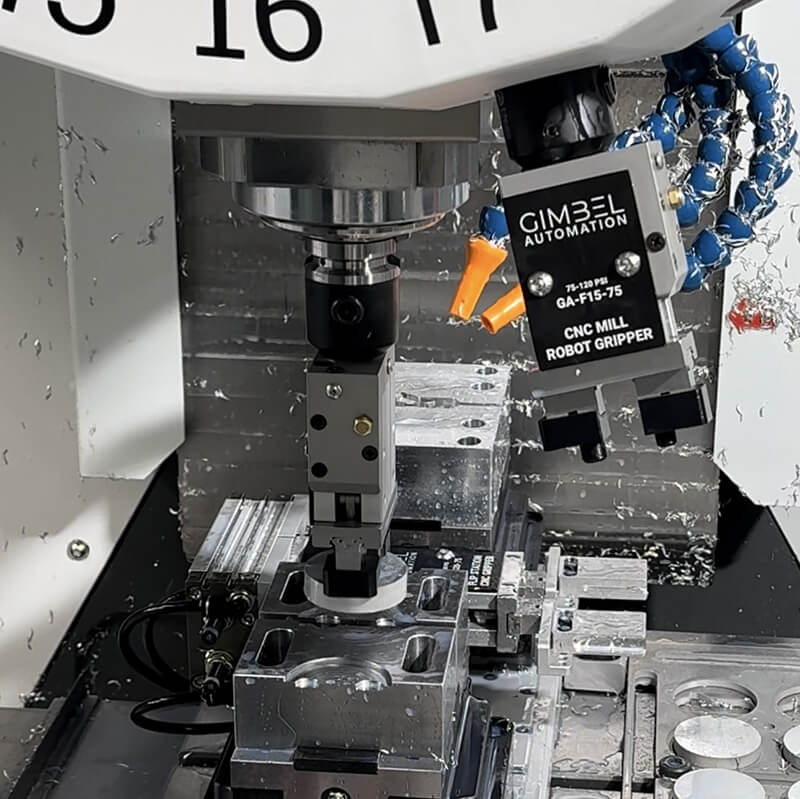
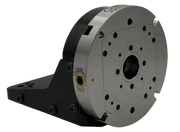
A CNC spindle gripper handles parts up to 10 lb, or up to 25 lb with the vacuum version. A part flip station can turn the part over between operations, so one cycle finishes both sides. For 5-axis work, IntraLoad™ CNC pallet changer stores 9 to 24 fixtured pallets inside a Haas UMC enclosure and swaps them using the machine's own motion.
The trade-offs are real, and you should know them. Trays take up table space. Tray size limits how many parts run per night. Part weight is capped. If you run heavy parts across several machines, a robot cell is the better tool. For small and mid-size parts on one or two mills, in-machine loading gets you running unattended for a fraction of the cost.
Whichever loading method you pick, the same handful of failures will try to stop the run.
Common Lights-Out Failure Modes and How to Prevent Them
Every lights-out failure we see falls into a short list. Plan for each one before the first unattended night.
| Failure | What happens unattended | Prevention |
|---|---|---|
| Broken tool | Every following part is scrap; possible crash | Tool life limits, sister tools, breakage check |
| Chips on the fixture | Blank seats crooked, part out of tolerance | Automatic blow-off or chip fan before each load, probe the part location |
| Missed pick or bad seat | Crash or scrap | Clamp confirmation, probe check before cutting |
| Air pressure drop | Vise or gripper loses grip | Pressure switch wired to an alarm and safe stop |
| Low coolant | Heat, tool failure, poor finish | Check and fill before every run, size coolant for the run length |
| Thermal drift | Features creep out of tolerance overnight | Warm-up cycle, probe critical features, automatic offset updates |
| Conveyor jam | Chips pile up and pack the machine | Timed conveyor cycles, clean out before each run |
None of these require exotic technology. They require discipline before the lights go off. Once the risks are covered, the next question is what it all costs.
How Much Does Lights Out Manufacturing Cost?
Lights out manufacturing costs anywhere from about $5,000 for in-machine loading on one mill to several hundred thousand dollars for a multi-machine robot cell. Most job shops start in the $5,000 to $70,000 range. The right tier depends on your machine, part size and volume.
| Tier | What it includes | Typical 2026 cost |
|---|---|---|
| Process add-ons | Chip fan, M-code solenoid kit, tool life setup | Under $1,500 (SpindleStorm3™ $179, MCodeAir™ kit $929) |
| In-machine loading | Spindle gripper, pneumatic vise, trays | One-Op bundle $5,079; Two-Op pallet bundle $15,069 |
| Auto door add-on | For loading from outside the enclosure | Side-Mount Auto-Door $2,789 |
| Bar feeder | 12 ft magazine feeder for a lathe | About $24,000 to $36,000 |
| In-machine pallet system | IntraLoad™ for Haas UMC | From $49,000 |
| Cobot tending kit | Cobot, gripper, cart or base, interface | About $47,000 to $70,000 |
| Integrated robot cell | Industrial robot, guarding, integration | $50,000 to $500,000 installed |
Budget for the costs that do not show up on a quote:
- Integration and programming time
- Extra I/O or control options for M-codes
- Soft jaws, fixtures and trays for each part number
- Scrap and machine time during validation runs
- Training for the people who set up the night
For robot cells in particular, the arm is only part of the bill. Integrator benchmarks put a fully installed cell at 2.5 to 4 times the price of the robot inside it.
Calculating Payback on Unattended Hours
Here is a simple, illustrative example. Adjust every number to your own shop.
- Assumption: A VMC currently runs one shift.
- Added time: 4 unattended nights a week at 8 productive hours each = 32 extra spindle hours.
- Assumption: $75 per hour of contribution margin on that work.
- Added margin: 32 × $75 = $2,400 per week.
| Investment | Weeks to pay back at $2,400/week |
|---|---|
| $5,079 One-Op bundle | About 2 |
| $49,000 IntraLoad™ system | About 20 |
| $100,000 robot cell | About 42 |
The math only works if you have the orders to fill those hours. Integrators typically underwrite 12 to 36 months of payback on a first robot cell. Run your own numbers in our CNC automation ROI calculator before you commit.
Your First Lights-Out Run: A Step-by-Step Plan for Job Shops
You do not need a dark factory to start. You need one machine, one part and a plan.
- Pick one machine and one repeat part from the readiness checklist above.
- Run it attended for several batches. Log tool life, cycle time, chip behavior and every alarm.
- Set tool life limits below your logged numbers and load sister tools.
- Swap the manual vise for a pneumatic vise or zero-point pallet.
- Add automatic loading that fits the part: gripper and tray, bar feeder, pallets or a cobot.
- Program a safe stop and an alert for every alarm condition.
- Run a “lights-dim” evening. The automation does the work while someone stays nearby.
- Inspect every part from that run. Compare the first part to the last.
- Extend to a full night, then a weekend.
- Add the next part number only after the first one runs clean three times in a row.
Most shops can get from step 1 to step 7 in a few weeks on a simple part. The slow part is validation, and that is time well spent.
How Human Roles Change
Lights-out operation changes what your machinists do, not whether you need them. The day shift becomes the shift that sets up the night: loading trays, checking tools, proving new programs and inspecting last night's parts. Skilled people spend more time on programming and process work and less time standing at a door waiting to swap parts.
Lights-Out Manufacturing Examples and Where the Industry Is Heading
The famous examples are high-volume plants like FANUC and Philips. The more useful examples for a job shop are smaller: a single VMC running brackets overnight, or a 5-axis mill cycling pallets through a weekend.
Forecasts have often run ahead of the shop floor. Gartner once predicted that by 2025, 60% of manufacturers would have more than two fully lights-out processes. You will see that figure misquoted online as “60% of manufacturers adopting lights-out by 2026.” Treat bold adoption numbers with care.
What is changing fast is monitoring. Remote alerts, spindle load tracking and machine data dashboards are now standard options on many controls. AI-based predictive maintenance is growing, but it does not replace a proven process.
The shops that run reliably at night are the ones with the most proven processes. Robot count matters much less.
How Gimbel Automation Helps Shops Go Lights-Out
Gimbel Automation builds in-machine CNC automation that turns the mill you already own into its own loading cell. No robot cell and no added floor space.
- CNC spindle grippers and vacuum grippers that load parts from the tool changer
- Pneumatic self-centering vises and zero-point workholding
- IntraLoad™ in-machine pallet automation for Haas UMC 5-axis mills
- Auto-doors, part flippers and M-code solenoid kits to complete the cell
- SpindleStorm3™ chip fans to keep fixtures clean between loads
We ship nationwide with manuals and remote programming support. For shops in California and the Western US, our team handles on-site installation, commissioning and training through our Turnkey Direct™ program.
Ready to run your first lights-out shift? Get a free automation plan for your machine and part.
Fast Implementation. Faster ROI. Real Customer Stories.
CJ Abraham | Precision Product Development
Learn how one manufacturer, Precision Product Development, used Gimbel's Two-Op Pallet and Gripper to automatically make thousands of production components.

Matt Blackwell | Blackwell Engineering
Discover how a manufacturer of production machined components for Laser-Cutters, Blackwell Engineering, has been running their production fully-automatically using the gimbel's In-machine Automation Systems.


Lights Out Manufacturing FAQs
Lights-out means production runs with no workers on site, so the lights can literally be switched off. Machines, automation and software handle loading, processing and quality checks. Most manufacturers apply it to specific cells or shifts, such as nights and weekends, rather than running an entire factory in the dark.
Lights-out machining is running CNC mills and lathes unattended, typically overnight or over a weekend. The machine loads its own parts, tracks tool life, checks part location and stops safely if something goes wrong. It requires a proven process, automatic workholding, automatic loading and reliable chip control before anyone walks away.
Yes. FANUC's robot plant in Japan has been described as lights-out since 2001 and was reported to run unsupervised for up to 30 days. Fully dark factories remain rare, though. Most manufacturers run lights-out cells or shifts inside a staffed plant, which is the realistic model for job shops.
They are close but not identical. A dark factory is an entire plant running with no people present. Lights out manufacturing is the broader method and includes partial setups, such as one CNC cell running nights while the rest of the shop works a normal day shift.
Yes, if it starts with the right job. Pick one repeat part with a frozen program on one machine. Add tool life limits, automatic workholding and loading, then prove it with a supervised evening run. In-machine automation lets small shops start for a few thousand dollars instead of a full robot cell.
Yes. Spindle grippers load parts from the tool changer using the machine's own axes, and pneumatic vises clamp on an M-code. In-machine pallet systems like IntraLoad™ swap fixtured pallets inside the enclosure. Bar feeders automate lathes. A robot makes sense for heavy parts or tending several machines at once.
It depends on how much material and tool life you load. With trays, pallets or a bar feeder sized for the job, a well-proven process can run a full night or an entire weekend. The limit is usually blank capacity, tool life or chip buildup, not the machine itself.
It can be, with the right safeguards. Program safe stops for every alarm, wire air pressure and clamp sensors to the control, and set up remote alerts. Keep chips and coolant under control. If you run straight cutting oil, consider fire suppression. Validate the job with a supervised run first.